
Legal Professionals Resources
Practical guides designed to support legal teams, graduates looking to advance in the legal landscape.
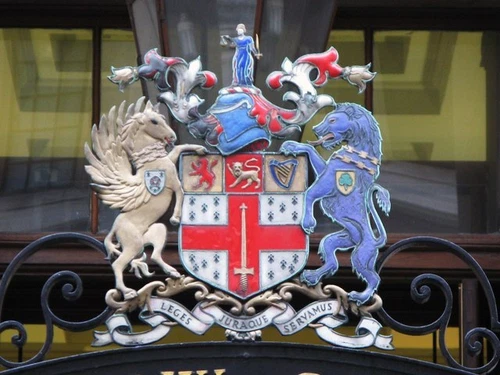
Summary of Diversity in the Legal Profession (England & Wales)
According to the Law Society and the Solicitors Regulation Authority (SRA), the legal profession has become more diverse over time, but representation at senior levels remains unequal.
Key findings:
- Ethnic Diversity: Around 19% of solicitors come from Black, Asian, or minority-ethnic (BAME) backgrounds.
Representation falls to ~8% at the partner level in large firms.
- Gender Diversity: Women make up 53% of practising solicitors**, but represent fewer full-equity partners.
- Socio-economic background: Lawyers are still more likely to come from professional / higher-income households compared with the general population.
Key themes highlighted by the Law Society:
- Persistent “progression gaps” — ethnic minority and working-class lawyers enter the profession but face barriers to promotion.
- Socio-economic disadvantage continues to affect entry routes, training access, and networking opportunities.
- Ongoing commitment by the Law Society to improve access, transparency, and inclusion.
Law Society & SRA Diversity Resources (Links)
- These are trusted, authoritative links you can place on your website:
Meaning of Social Mobility
Social mobility refers to a person’s ability to move between different socio-economic classes during their lifetime.
This typically involves access to opportunities such as:
- Education
- Professional careers
- Economic stability
- Social networks
- Career progression
In the legal profession, social mobility focuses on:
- Whether individuals from working-class or low-income backgrounds can enter law.
- Whether they progress to senior levels at the same
rate as those from privileged backgrounds. - Removing barriers linked to schooling, income level, parental occupation, or lack of professional networks.
Links
Graduate Career Information: Becoming a Solicitor (Law Society + SRA Summary)
Overview
To qualify as a solicitor in England & Wales, graduates now follow the SQE route (Solicitors Qualifying Examination), regulated by the SRA.
The Law Society provides guidance and career support for aspiring solicitors.
The Requirements to Qualify
To become a solicitor, you must complete:
(A) Academic Requirement – Degree or Equivalent
- A degree in any subject
OR - An equivalent Level 6 qualification/apprenticeship
(B) SQE1 – Exam on Functioning Legal Knowledge (FLK)
- Two exams
- 180 multiple-choice questions each
- Covers core legal subjects: Contract, Tort, Crime, Property, Wills, Business Law, Dispute Resolution, etc.
(C) SQE2 – Practical Legal Skills Assessment
Tests practical skills including:
- Client interviewing
- Advocacy
- Legal drafting
- Legal writing
- Legal research
- Case and matter analysis
(D) QWE – Qualifying Work Experience (2 years)
Must complete 2 years’ legal work experience (full or part-time).
Can be completed in up to 4 organisations.
Can include:
- Paralegal work
- Law clinic placements
- Voluntary legal advice roles
- In-house legal teams
- Law firms of any size
- Must be confirmed by a solicitor or a firm’s COLP (Compliance Officer for Legal Practice).
(E) Suitability & Character Requirements
- Applicants must pass an SRA character and suitability assessment.
- This checks honesty, integrity, and fitness to practise.
(Character & Suitability link)
Law Society Resources for Aspiring Solicitors
These pages help graduates understand the profession, pathways, and support: